

By Andrea Townsend
Flight Director, AARG
and Fouad Louik
President, SEDS
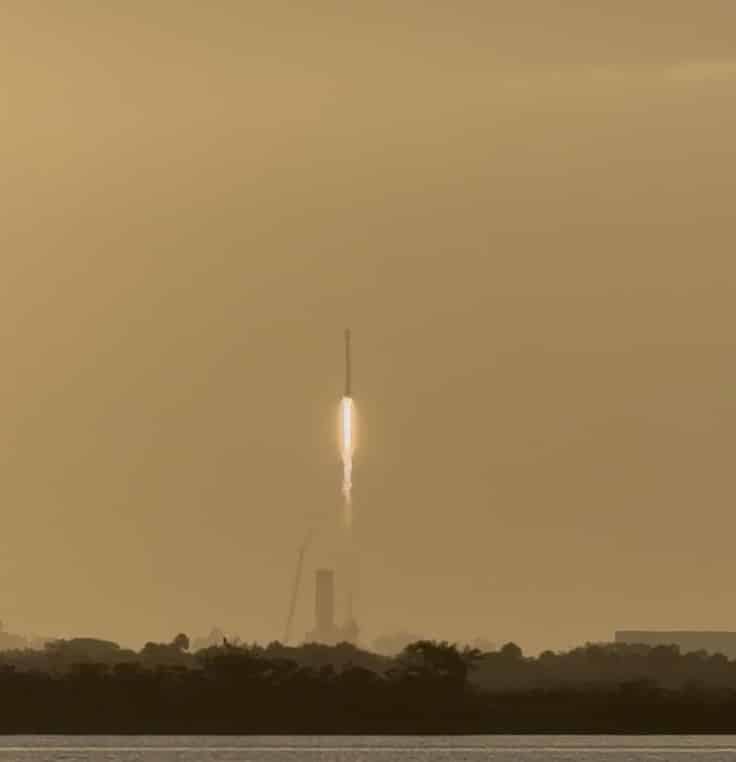
On the morning of August 30, 2026, students from the University’s American Public University System Analog Research Group (AARG) and from Students for the Exploration and Development of Space (SEDS) gathered virtually to watch a Falcon Heavy rocket launch from the Kennedy Space Center located in Merritt Island, Florida. This rocket launch by the National Aeronautics and Space Administration (NASA®) started one of the most anticipated astronomy missions of the decade: putting the Nancy Grace Roman Space Telescope into space.
What Is the Nancy Grace Roman Space Telescope?
The Roman Space Telescope (also known as “Roman”) is a powerful, wide-field telescope capable of surveying large regions of the sky with unprecedented efficiency. Its field of view is at least 100 times larger and its survey speed is up to 1,000 times faster than the Hubble Space Telescope. This powerful telescope is designed to investigate some of the most significant unanswered questions in modern astronomy around exoplanets, dark matter, and dark energy.
Roman is now traveling nearly one million miles from Earth to the Sun-Earth Lagrange 2 point (L2 point), approximately four times farther than the distance to the Moon. There, the telescope will join other observatories, including the Webb Space Telescope, and begin a three-month commissioning period. NASA expects to release Roman’s first images in early 2027.
Feelings from the Shared Launch Experience
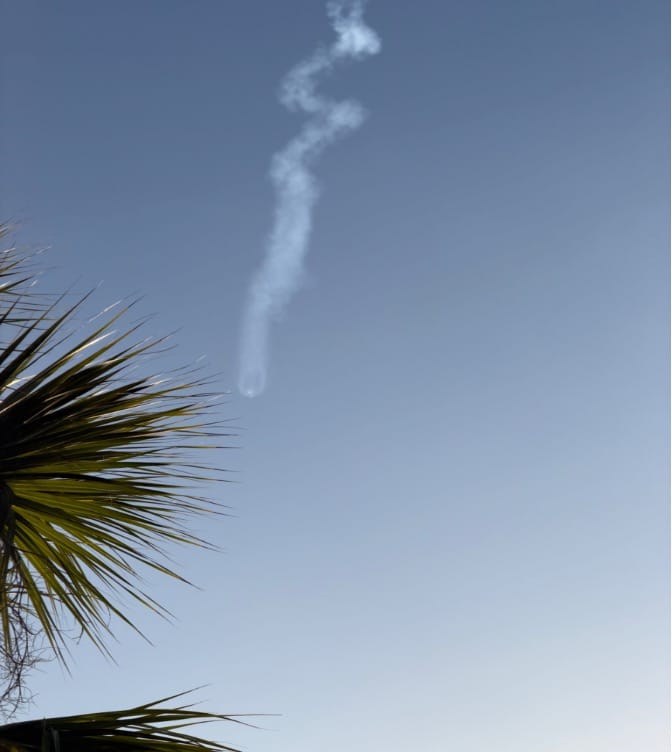
Andrea Townsend, Flight Director for AARG, witnessed the launch from eight miles away from Florida’s Space Coast. One of her most memorable moments was watching the Falcon Heavy side boosters return and land successfully.
“Watching the Falcon Heavy liftoff was incredible to witness but seeing the two boosters return and land almost simultaneously was the moment that really stood out to me. I’ve watched many launches and many landings but being able to experience both boosters landing almost together was surreal. It was one of those moments that I knew what was happening on a technical level, but I was still in complete awe witnessing what we’re capable of,” Andrea says.
SEDS president Fouad Louik had a similar experience. “It is a bit like watching a scrambled egg put itself back together. What once seemed impossible has become a routine part of modern spaceflight, demonstrating how rapidly launch technology continues to evolve,” Fouad adds.
Faculty advisor Dr. Michael Zeilnhofer also shared his feelings about the Roman Space Telescope launch. “Having witnessed several space telescope launches over the years, I found the launch of the Nancy Grace Roman Space Telescope especially exciting because it marks a significant step forward in our exploration of the next major frontier in astronomical observation.”
For students across both organizations, the launch represented more than sending a new and powerful telescope into space. It provided an opportunity to connect with their peers, share their enthusiasm for space and witness the beginning of a scientific journey that may transform our understanding of the Universe.
Looking Ahead to the Next AARG and SEDS Event
Through our work with SEDS and AARG, we want to provide experiences that bridge the gap between classroom learning and the rapidly evolving world of space exploration.
“One of the things that makes space exploration unique is that students can follow major discoveries and missions as they happen,” Fouad says. “Whether it is a telescope launch, a guest lecture, or a moon observation event, these experiences help connect what students learn in the classroom with people, missions, and discoveries shaping the future of space exploration.”
Our next event is International Observe the Moon Night on September 19. We will host a series of activities to celebrate on the our SEDS chapter Discord® channel.
Interested in joining AARG or SEDS? Visit our webpages for more information.
NASA® is a registered trademark of National Aeronautics and Space Program.
Discord® is a registered trademark of Discord, Inc.
About The Authors
Andrea Townsend is an undergraduate student majoring in space studies with a concentration in aerospace at American Public University part of American Public University System. Her focus is on human spaceflight, mission operations, space systems, and launch vehicles. She serves as a flight director for AARG, where she works in mission planning, crew operations, and flight leadership. Andrea has a passion for rockets and launch operations, as well as supporting and encouraging women pursuing careers in STEM and the space industry.
Fouad Louik is the President of SEDS is a graduate of American Public University, where he earned a bachelor’s degree in space studies with a concentration in astronomy. He is currently pursuing a master’s degree in space studies.
Fouad served as a Mission Specialist on the AARG9i analog mission. He is currently employed as an Education Champion with PRACTICE, supporting student learning and engagement in educational settings.
His interests include astronomy outreach, analog astronaut research, planetarium education, and science communication. He is passionate about using space exploration to inspire curiosity, lifelong learning, and greater access to STEM education worldwide.

Comments are closed.