

Start an Emergency & Disaster Management degree at American Military University. |
This article first appeared at WallyBoston.com.
By Dr. Wally Boston
President, American Public University System
 There have been many calls for transparency of costs/prices in healthcare in the United States, as well as proposals for changes in the manner in which healthcare is funded. The most recent major change in our healthcare system was the Affordable Care Act, passed by Congress and signed by President Barack Obama in 2010. The ACA is also known as Obamacare.
Regardless of your support or opposition to the ACA (and there are tens of millions of people on both sides of this politically), the bill was proposed as a means to decrease the number of uninsured people in the U.S. As the theory goes, the more people who have access to healthcare, the lower the cost of healthcare since people won’t wait until they’re really sick to utilize healthcare providers at a greater cost than if they were able to access them on a regular basis through medical insurance.
Peter Ubel, a physician and behavioral scientist at Duke University, authored a book called Sick to Debt: How Smarter Markets Lead to Better Care, that calls for a different path to improve healthcare than the open market vs. “Medicare for All” plans that our polarized politicians support. His reasoning is that neither of these two extreme options are likely to work. He cites from his three decades of experience as a physician and behavioral scientist that medical decisions are influenced by irrational forces. Until policymakers understand the psychology that influences healthcare choices, they won’t understand how to implement a workable solution.
Dr. Ubel divides his book into two parts. Part 1 examines the benefits of healthcare consumerism and why asking patients to cover some portion of their healthcare expenses holds the potential to align the system with people’s goals and values. Part 2 of the book addresses the functioning of the healthcare markets so that people are enabled to make healthcare choices that promote their best interests. Ubel writes that people need a mixture of reforms that better align patients’ out-of-pocket expenses with the value of their healthcare.
In each of his two parts, Dr. Ubel weaves the stories of patients in the U.S. and other countries with serious and expensive illnesses with their choices for care. Some of these patients were his patients, and others were a part of groups analyzed and assessed by his behavioral science research team. In between the recent stories of illnesses, expensive treatments, and options, Ubel provides readers with historical perspectives. One example is the industrialization of Germany, which required millions of workers to leave their farms for cities and factories in the late 1800s. German Chancellor Otto von Bismarck passed a law requiring factories and guilds to enroll workers in sickness funds to care for them when they were too sick to work. After the law, the sickness rate doubled and the duration of illnesses increased by 50 percent.
Early in the book, Peter Ubel writes that “even after this book sells millions of copies, the U.S. healthcare system will still be a mess. Healthcare is hard: it costs a lot of money and people still get sick and die.” As a consumer, employer, and former provider, I can assure you that healthcare is hard. I recommend this book to everyone with an interest in educating themselves about the complex relationships in healthcare funding and choosing medical options with and without cost or value transparency. You won’t regret it and if you’re a supporter of one of the two extreme opposite solutions, you may move off of that as well. If you choose to read Sick to Debt, let me know your thoughts.
Visit Dr. Boston’s official blog site for more articles.
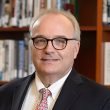 Dr. Wallace E. Boston was appointed President and Chief Executive Officer of American Public University System (APUS) and its parent company, American Public Education, Inc. (APEI) in July 2004. He joined APUS as its Executive Vice President and Chief Financial Officer in 2002. In July 2016, he retired as APUS president and continued as CEO of APEI. In September 2017, he was reappointed APUS president after the resignation of Dr. Karan Powell. In September 2019, Angela Selden was named CEO of APEI, succeeding Dr. Boston who will remain APUS president until his planned retirement in June 2020. Dr. Boston guided APUS through its successful initial accreditation with the Higher Learning Commission of the North Central Association in 2006 and ten-year reaccreditation in 2011.
In November 2007, he led APEI to an initial public offering on the NASDAQ Exchange. During his tenure, APUS grew to over 100,000 students, 200 degree and certificate programs, and approximately 90,000 alumni. In addition to his service as a board member of APUS and APEI, Dr. Boston is a member of the Board of Advisors of the National Institute for Learning Outcomes Assessment (NILOA), a member of the Board of Overseers of the University of Pennsylvania’s Graduate School of Education, a board member of the Presidents’ Forum, and a board member of Hondros College of Nursing and Fidelis, Inc.
He has authored and co-authored papers on the topic of online post-secondary student retention, and is a frequent speaker on the impact of technology on higher education. Dr. Boston is a past Treasurer of the Board of Trustees of the McDonogh School, a private K-12 school in Baltimore. In his career prior to APEI and APUS, Dr. Boston served as either CFO, COO, or CEO of Meridian Healthcare, Manor Healthcare, Neighborcare Pharmacies, and Sun Healthcare Group. Dr. Boston is a Certified Public Accountant, Certified Management Accountant, and Chartered Global Management Accountant. He earned an A.B. degree in History from Duke University, an MBA in Marketing and Accounting from Tulane University’s Freeman School of Business Administration, and a Doctorate in Higher Education Management from the University of Pennsylvania’s Graduate School of Education. In 2008, the Board of Trustees of APUS awarded him a Doctorate in Business Administration, honoris causa, and, in April 2017, also bestowed him with the title President Emeritus.
Dr. Boston lives in Owings Mills, MD with his wife Sharon and their two daughters.

Comments are closed.